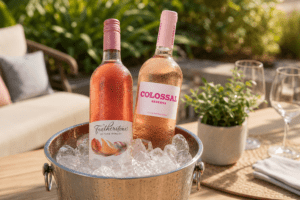
 If rosé has a season, it’s summer—where a light, crisp, savoury pink wine always has a place at the table—especially on the patio and poolside. That said, I find myself increasingly drinking rosé throughout the year, given its outstanding food-pairing flexibility—everything from seafood and Mediterranean cuisine to chicken, pizza and cheese and charcuterie.
Here are five fun facts about rosé.
- Its pink hue comes from limited skin contact with red grapes during fermentation— generally anywhere from two to 24 hours. The longer the skin contact, the darker the hue. The resulting colour can vary from pale salmon to neon red.
- Rosé has ancient roots, with early versions traced back to the Mediterranean world and often linked to ancient Greece and Phoenician trade routes, where early wines were often pale because winemakers pressed red grapes with little skin contact or diluted wine with water.
- Provence in Southern France is the region most strongly associated with modern dry rosé, and it remains the category’s best-known benchmark.
- Rosé can be made in four different ways. First, there’s direct pressing, where red grapes are pressed right away, with very little skin contact, so the wine stays pale and delicate. This usually makes for light, crispy rosé. Next, there’s short maceration/skin contact, where the crushed grapes sit on their skins for a few hours up to a couple of days, giving the wine more colour and flavour. Third is saignée, where a portion of juice is “bled off” early during red winemaking and fermented separately as rosé, with the remaining juice used to make a more concentrated red wine. This method often produces rosé with a bit more body and intensity because it comes from fruit already destined for red wine. And last, we have blending, where a small amount of red wine is mixed into white wine to make rosé, though this is less common and often limited by wine law. You will, however, often see it used in making sparkling rosé.
- In the modern era, rosé has become a symbol of relaxed luxury and vacation culture, especially in the South of France, which helped make it feel stylish. A pop-culture boost from celebrities like Brad Pitt, Sarah Jessica Parker, John Legend, Post Malone and others tied to rosé brands hasn’t hurt.
Another nice thing about rosé is that it tends to be very affordable, given its less complicated/short-aging production methods.
Here are a pair of well-priced bottles you can find at the LCBO.
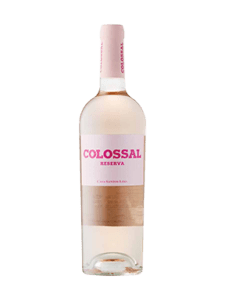 Casa Santos Lima Colossal Rosé 2025 — Lisboa, Portugal ($13.95) 86/100
A blend of Cabernet Sauvignon and native Castelão grapes, this new LCBO release is a very subtle rosé in all respects, from its salmon-pink colour to its laid-back mineral-strawberry notes. At this modest price point, though, I wonder if most consumers would prefer a more traditional shade of pink and aromatic nose. The fact that it features a cork enclosure rather than a screwcap also seems out of place for a $13.95 bottle that’s designed for immediate enjoyment. (I don’t know anyone who cellars their rosés!) But I personally appreciate its delicate nature—even if having to reach for the corkscrew is annoying. (3g/L sugar. 12.5% alc.)
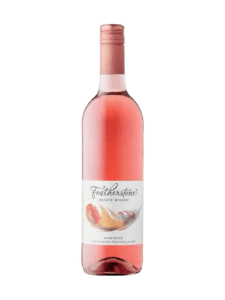 Featherstone Rosé 2024 — Niagara Peninsula ($16.95) 89/100
A mix of Cabernet Sauvignon, Gamay Noir and Pinot Noir, this hits the sweet spot for me for rosés—red berry, watermelon and a hint of cotton candy aromatics, flavourful without being too tart, vibrant colour, and mouthwatering acidity but with mouthfeel too. A sure-fire crowd pleaser, it offers all kinds of food-pairing options. While available at the LCBO, check out its Featherstone Estate Winery home in Vineland, and enjoy a glass on the newly expanded deck! (15 g/L sugar. 12.5% all.)

Leave a Reply
Your email is safe with us.