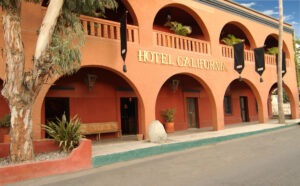
Hotel California in Todos Santos, Mexico.
Sixteen years ago, I was still living the lush life. A lot of free golf at beautiful Ontario courses, as well as a few invites a year to some of the world’s most treasured golfing destinations—stuff I could never afford then…or now. I quite liked seeking out the richer quarters where the gilded people go, while flying around the world on someone else’s dime—the rewards of being the editor of a major golf publication or two, and, admittedly, knowing how to craft the odd travel story.
One thing about those well-orchestrated itineraries is that the schedule tends to be tight. We’re like marines in that no one gets left behind. If the bus is leaving for the next town at 8 a.m., you’d better be on it. On that whirlwind French excursion, we hit five hotels in five nights at one point. Nobody remembered all the hotel names by Day 4.
You can consequently miss true touristy gems in these circumstances, including those spontaneous side trips that—good or bad—entrench themselves in your memory bank. Which is why I came to love solo media junkets. Unrestricted by traditional media group activities, I would stumble across witch doctors in the Dominican Republic, a street market of creepy crawly things straight out of a David Cronenberg movie in South Korea, a cryogenics lab in Scottsdale and, perhaps my favourite, Hotel California.
Seventy-four unspectacular kilometres north of Cabo San Lucas, Mexico, straddling the Tropic of Cancer, the vast scrub of wasteland known as the Baja Desert meets up with the Pacific Ocean and the Sierra de La Laguna mountains at the town of Todos Santos (population 7,185). While the local tourism board likes to cast Todos Santos as a bastion of tranquillity (compared with the somewhat higher-pulsed Cabo an hour south) and a beacon for a variety of artisans, I venture to say most visitors come to this historic oasis in the desert to see the so-called real Hotel California.
Don Henley and the rest of the Eagles, whose song of the same name was among the most famous of the 1970s, claim to have had nothing to do with the place, but the sign on the hotel pre-dates the band, so the urban myth persists for thousands of tourists who annually flock here to snap pictures and buy memorable T-shirts.
That’s pretty much why I ventured into the desert during a 2010 Los Cabos media invite after hearing of the establishment’s existence—a trek to my music Mecca. Unfortunately, my excursion was during the day, so I consequently saw no “shimmering light” (nobody should be driving around here after sunset anyway, since free-ranging, long-horned Corriente cattle occasionally cross the highway, and there’s a parade of randomly occurring speed bumps leading into and out of town). Nor did I hear “the mission bell,” although there actually is one just a block away. And, contrary to popular belief, you can leave. But there are more reasons to stay than most realize, including art and film festivals, with accommodations ranging from a youth hostel to a first-class inn.
Descendants of the families that began ranching in the area 200 years ago still make up most of the Todos Santos (All Saints) population. But the town actually traces its earliest inhabitants back some 3,000 years to “Matancita Man,” the human skeletal remains of five people found nearby in La Matancita. Two of the male skulls found at the site showed signs of cranial fractures from interpersonal violence. So, basically, it was the prehistoric equivalent of Cabo San Lucas at 2:00 a.m. after two-for-one tequila shots.
Today, the local economy depends on vegetable farming, orchards, fishing, ranching and, of course, tourism. An important mission settlement until secularization in 1840, it later thrived as Baja’s sugarcane capital, supporting eight sugar mills by the late 1800s. However, it was still relatively mired in the dark ages until recent generations. There wasn’t even a main highway there until 1984, when Mexico 19 was paved between San Pedro and Cabo. Even telephones remained a rare sight until about 1995.
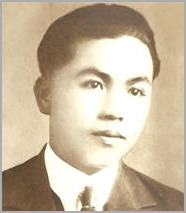
Antonio Wong Tabasco, founder of Hotel California and cold beer in Todos Santos.
For all its history, the most photographed site remains the mostly unchanged facade of Hotel California, a one-time $2.50-a-night dive that now operates as a boutique hotel. The property was founded in 1947 and opened in 1950 by a “Mr. Wong,” a Chinese émigré who later homogenized his name to Antonio Wong Tabasco. (Among Wong’s many contributions was introducing ice to the area, paving the way for cold beer, which alone should have earned him a monument.)
I opted for the new-age combo of a margarita and Caesar salad, snapped my requisite photos for posterity and made my way 90 minutes back to my oceanfront hotel on the Cabo strip, missing, as many do, the more venerable sites of this sleepy little town, but managing to hit every speed bump on my way out.



Leave a Reply
Your email is safe with us.