Here’s a little story about the Nebbiolo grape, the name of which is derived from nebbia, the Italian word for fog (since harvest happens late in October amid heavy autumn mists in the hills of Piedmont. Italy). First documented in 1268 near Turin, Nebbiolo has long been prized for the power and perfume it yields in the Barbaresco and Barolo wines it’s used in.
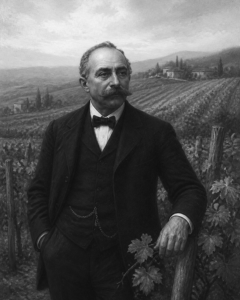
Enrico Serafino
Few producers have championed Nebbiolo’s potential as consistently—or as long—as Enrico Serafino. In 1878, Enrico, heir to a well-off family from Romano Canavese, made a daring move: he relocated to Canale, right in the heart of Piemonte’s finest wine country, and began crafting Metodo Classico sparkling wines, Barolo and Barbaresco. By 1884, the winery earned royal recognition as “Provveditore del Duca di Genova,” proudly displaying the crest of Italy’s Real Casa. Just over a decade later, Serafino wines were sailing across the Atlantic, reaching eager palates in the Americas.
Medals, Royalty, and Innovation
The winery’s reputation soared in the early 20th century. At the 1900 Paris Universal Exposition, Enrico Serafino won medals for Barolo, Nebbiolo, Barbera and even Red Vermouth. In 1910, Enrico himself was named “Cavaliere del Lavoro,” cementing the brand’s status among Italy’s luxury wine elite. Fun fact: in 1919, Serafino’s Grignolino was served to U.S. President Woodrow Wilson during his post-WWI European tour.
Fast forward to 1989, when the Barbero Group acquired the winery and launched the Alta Langa project, focusing on premium sparkling wines. The 2000s brought new ownership, including the Krause Gentile family in 2015, who invested in prime Barolo vineyards. In 2014, the winery’s Zero Alta Langa Metodo Classico was named Best Italian Sparkling Wine by Gambero Rosso, and in 2021, the Alta Langa Zero 140 Pas Dosé 2008 earned a stunning 99/100 from Doctor Wine.
Enrico Serafino continues to innovate, experimenting with the Pinot Meunier grape in Piedmont. From royal cellars to UNESCO-listed landscapes, this winery’s story is a masterclass in tradition, resilience and sparkle.
But it’s that alluring Nebbiolo that remains at its heart. Here’s a look at a just-released Barbaresco from the winery that’s worth the price.
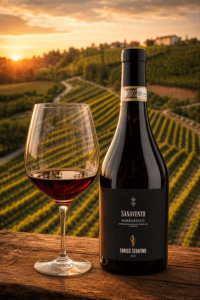 Enrico Serafino Seravento Barbaresco 2022 — Piedmont, Italy ($39.95)
Can a wine seem both lean yet full-bodied at different points during the meal? Fresh and dry yet multi-layered on the palate? Northern Italy’s Nebbiolo grape is one of the few that can pull this sort of thing off. Tart cherry, rose petals and eucalyptus lead, with tobacco, tar, and balsamic undertones. Firm tannins and bright acidity keep it focused. Unlike the more classic-tasting, cellar-worthy 2021 vintage, the hot 2022 edition is a little riper, meatier and ready to drink now (although its window extends to 2033 or so). Best with egg pastas, risotto, earthy umami flavours like mushrooms and truffles, duck, game and aged cheeses—though it’s compelling solo as well. A thinker’s wine that unfolds slowly. 3 g/L sugar. 14.5% alc. 92


Leave a Reply
Your email is safe with us.